A worker climbs a scaffold without fall protection. The foreman sees it but doesn’t correct it—no time, no system. Days later, a fall occurs. Preventable? Yes. Predictable? Also yes. This is where the meaning of a toolbox talk becomes more than jargon—it becomes a lifeline.
A toolbox talk isn’t just a quick safety chat. It’s a structured, brief, frontline safety meeting designed to address immediate hazards, reinforce protocols, and engage workers in real-time safety thinking. But understanding what is a toolbox talk meaning goes beyond definition—it’s about context, execution, and culture.
The Core Meaning of a Toolbox Talk
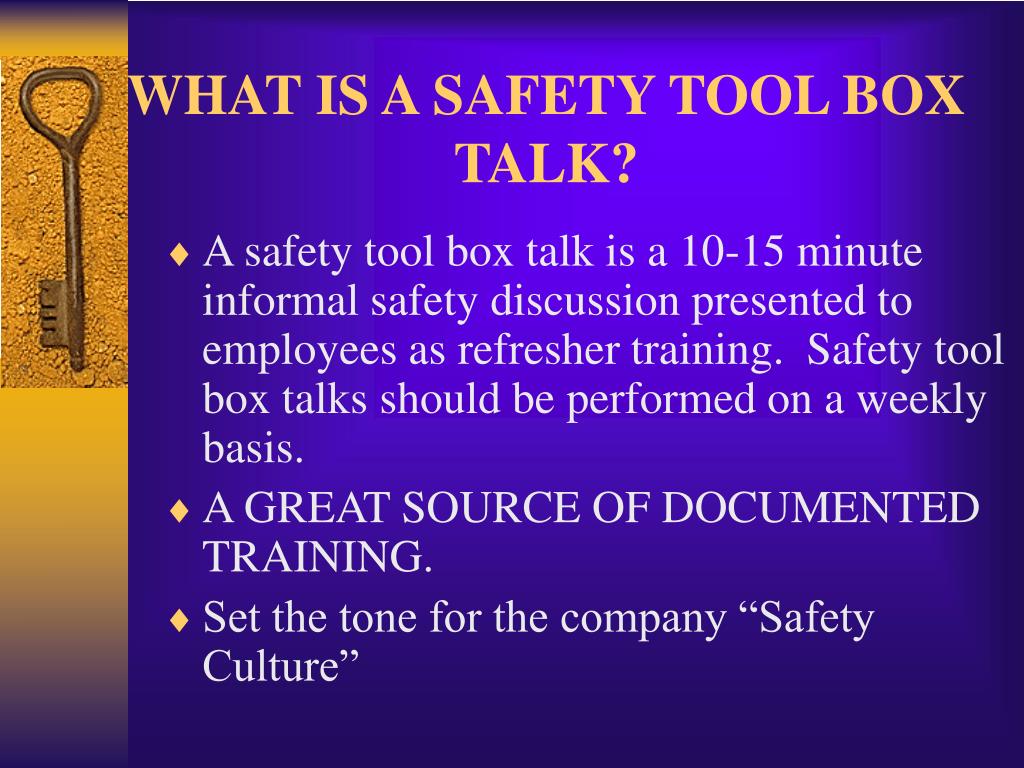
At its heart, a toolbox talk is a short, focused safety discussion held at the job site, typically before work begins. It’s situational, relevant, and participatory. Unlike formal safety training, it’s not about certification—it’s about awareness.
The term originated in industries like construction, manufacturing, and utilities, where tools, equipment, and high-risk tasks are part of daily work. It was literally a talk held near the toolbox—hence the name. Today, it’s a cornerstone of proactive safety programs.
Key elements of the meaning include:
- Timeliness: Addresses current or imminent risks.
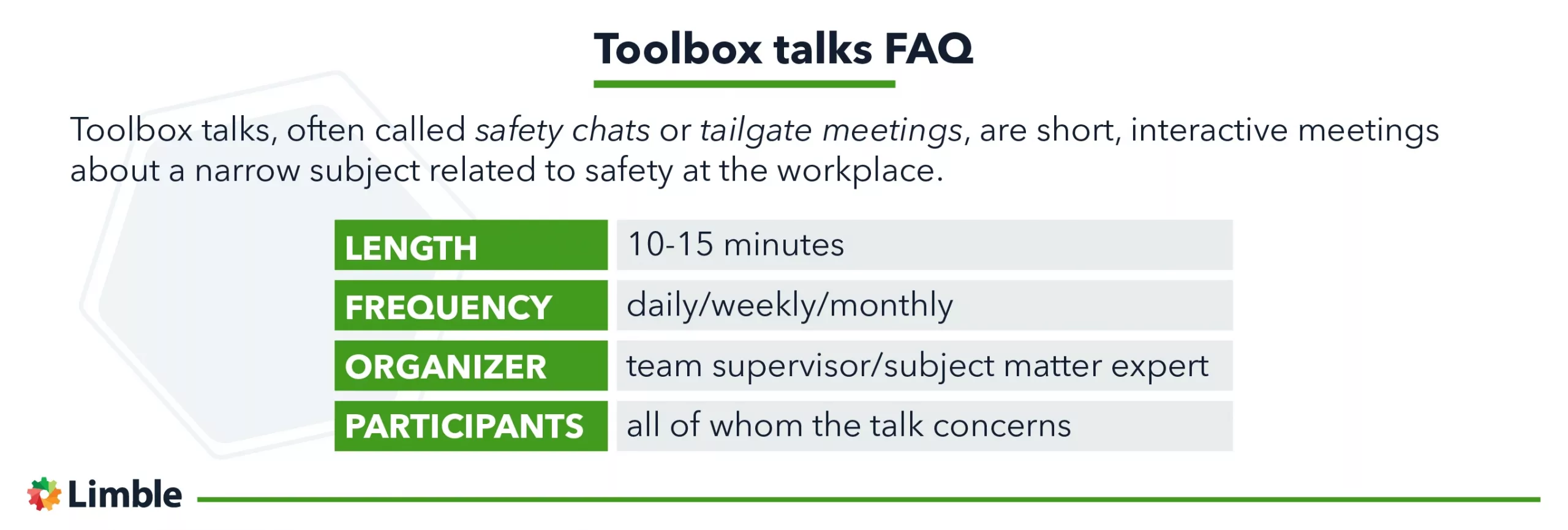
- Brevity: Usually 10–15 minutes long.
- Relevance: Focused on the day’s tasks or a recurring hazard.
- Interaction: Encourages questions and worker input.
- Documentation: Often recorded for compliance and tracking.
The meaning shifts when it’s treated as a box-ticking exercise. A genuine toolbox talk changes behavior. A poorly run one gets ignored.
Why a Toolbox Talk Is More Than Just a Safety Chat
Many confuse toolbox talks with general safety reminders or manager monologues. But the true meaning lies in its function as a behavioral intervention.
Consider this: A crew is starting a roofing job. The site has uneven surfaces, high winds forecasted, and multiple access points. A generic talk about “wearing PPE” won’t cut it. But a targeted toolbox talk on fall protection during high-wind conditions—with input from the crew, a review of anchor points, and a quick equipment check—does.
This is the difference between talking about safety and doing safety.
Real-world impact comes from:
- Shared ownership: Workers aren’t passive listeners—they’re asked to identify risks.
- Immediate applicability: The talk links directly to that day’s tasks.
- Accountability: Supervisors document attendance and topics, creating a safety trail.
When done right, a toolbox talk becomes a culture-building tool, not just a compliance requirement.
When Should a Toolbox Talk Happen?
Timing defines effectiveness. A talk delivered a week before a high-risk task loses relevance. One held mid-crisis is too late.
The meaning of a toolbox talk includes strategic timing. It should occur:
- Before starting a new task – especially if it involves confined spaces, heights, or hazardous energy.
- After an incident or near-miss – to reinforce lessons and prevent repetition.
- When conditions change – weather, staffing, or equipment changes.
- At the start of a shift – to set safety expectations.
- During onboarding – to integrate new workers into site-specific risks.
For example, a utility crew preparing to work on live electrical lines should have a toolbox talk that morning, covering lockout/tagout procedures, PPE checks, and communication protocols. Delaying it undermines its purpose.
Common Mistakes That Dilute the Meaning
Even companies that run toolbox talks often miss the point. The ritual is there, but the impact isn’t.
Frequent missteps include:
- Reading from a script: Workers tune out when it’s not conversational.
- One-size-fits-all topics: Talking about forklift safety on a day with no forklifts.
- No worker engagement: If no one speaks except the supervisor, it’s not a talk—it’s a lecture.
- Poor documentation: No records mean no proof of compliance or progress.
- Inconsistent frequency: Doing it only when auditors are expected.
A roofing company that repeats the same “hard hat safety” talk every Monday—regardless of the week’s tasks—misses the entire point. The meaning is in relevance, not repetition.
How to Run an Effective Toolbox Talk
An effective toolbox talk aligns with its true meaning: timely, targeted, and interactive.
Follow this workflow:
- Choose a specific topic – e.g., “Using ladders on slippery surfaces.”
- Gather the crew – on-site, before work starts.
- Explain the hazard – use real examples, not abstract concepts.
- Engage the team – ask: “Have you seen this risk before? How did you handle it?”
- Review controls – PPE, procedures, emergency steps.
- Answer questions – clarify doubts immediately.
- Document – sign-in sheet, topic, date, attendees.
Example: A crew is working on a wet concrete pour. The supervisor leads a 12-minute talk on:
- Slips and falls on wet surfaces
- Proper footwear inspection
- Housekeeping during the pour
- Emergency response if someone slips
Workers share that a previous site had no warning signs—so they add that to today’s plan. The talk ends with a reminder to report any unsafe conditions immediately.
This isn’t just talk—it’s actionable safety.
Toolbox Talks vs. Other Safety Meetings
Not all safety conversations are the same. Confusing toolbox talks with other formats weakens their impact.
| Type | Duration | Focus | Frequency |
|---|---|---|---|
| Toolbox Talk | 10–15 min | Immediate task or hazard | Daily or per task |
| Safety Meeting | 30–60 min | Broader policies, audits, training | Weekly/monthly |
| Pre-Task Briefing | 5–10 min | Specific job steps, roles | Before each task |
| Incident Review | 20–40 min | Root cause, lessons learned | After an event |
While pre-task briefings cover logistics, toolbox talks deepen safety awareness. They’re complementary but distinct.
A common mistake? Merging them. A pre-task briefing should cover what and how; a toolbox talk covers what could go wrong and how to stay safe.
Practical Examples of Toolbox Talk Topics
The meaning of a toolbox talk becomes clear through real-world application. Here are 10 relevant topics with context:
- Working at Heights: Harness Inspection
- When: Before any work above 6 feet. Key points: Check for frayed straps, proper anchoring, fall clearance.
- Hot Work and Fire Prevention
- When: Welding, cutting, grinding. Key points: Fire watch, extinguisher access, combustible material removal.
- Trenching and Excavation Safety
- When: Digging deeper than 5 feet. Key points: Soil type, shoring, emergency exit routes.
- Electrical Safety Near Overhead Lines
- When: Operating cranes or lifts. Key points: Minimum clearance (10 ft), spotters, de-energizing lines.
- Hazard Communication (HazCom)
- When: Using new chemicals. Key points: SDS review, labeling, PPE, spill response.
- Slip, Trip, and Fall Hazards
- When: Wet floors, cluttered walkways. Key points: Housekeeping, signage, footwear.
- Machine Guarding
- When: Operating saws, presses, conveyors. Key points: Never bypass guards, lockout procedures.
- Heat Stress Prevention
- When: High temps, strenuous work. Key points: Hydration, rest breaks, symptom recognition.
- Night Work Visibility
- When: Low-light conditions. Key points: Hi-vis clothing, lighting, traffic control.
- Emergency Evacuation Drills
- When: New site, staff changes. Key points: Meeting points, communication, accountability.
Each topic should tie directly to the day’s work—not pulled from a generic list.
The Bigger Picture: How Toolbox Talks Build Safety Culture
The meaning of a toolbox talk extends beyond hazard reduction. It’s a tool for cultural transformation.
When workers see that their input is valued, that risks are discussed openly, and that safety isn’t just a poster on the wall—they begin to own it.
Companies with strong safety cultures don’t just have toolbox talks—they believe in them. They track trends, act on feedback, and use talks to spot systemic issues.
For instance, if three talks in a week highlight poor lighting in an area, it’s not just a safety issue—it’s a facility maintenance issue. The talk becomes a diagnostic tool.
Final Thoughts: Make the Meaning Matter
Understanding what is a toolbox talk meaning isn’t about memorizing a definition. It’s about recognizing its role as a dynamic, human-centered safety practice.
It’s not enough to hold a talk every Monday at 7:00 a.m. Ask: Is it relevant? Is it engaging? Does it change behavior?
Run your next toolbox talk like it could prevent a serious injury—because it can. Choose a real hazard, involve your team, and document the outcome. Turn a routine moment into a meaningful one.
Safety isn’t built in boardrooms. It’s built in the field, one toolbox talk at a time.
FAQ
What is the main purpose of a toolbox talk? To address immediate safety hazards, reinforce safe practices, and engage workers in real-time safety discussions before work begins.
How long should a toolbox talk last? Typically 10 to 15 minutes—long enough to cover the topic, short enough to maintain attention.
Who should lead a toolbox talk? Usually a supervisor, foreman, or safety officer, but experienced workers can also lead with proper guidance.
Do toolbox talks need to be documented? Yes. Records of topics, attendees, and dates are essential for compliance and tracking safety performance.
Can toolbox talks reduce workplace accidents? Yes. When done correctly, they increase hazard awareness and promote proactive safety behavior, reducing incident rates.
Are toolbox talks required by OSHA? OSHA doesn’t mandate toolbox talks specifically, but they support safety training and communication requirements under general duty clauses.
How often should toolbox talks be held? Ideally daily or before starting high-risk tasks, depending on site conditions and work complexity.
FAQ
What should you look for in What Is a Toolbox Talk Meaning and Why It Matters? Focus on relevance, practical value, and how well the solution matches real user intent.
Is What Is a Toolbox Talk Meaning and Why It Matters suitable for beginners? That depends on the workflow, but a clear step-by-step approach usually makes it easier to start.
How do you compare options around What Is a Toolbox Talk Meaning and Why It Matters? Compare features, trust signals, limitations, pricing, and ease of implementation.
What mistakes should you avoid? Avoid generic choices, weak validation, and decisions based only on marketing claims.
What is the next best step? Shortlist the most relevant options, validate them quickly, and refine from real-world results.




/cdn.vox-cdn.com/uploads/chorus_image/image/70269281/112379621.0.jpg)

